
The political journey of Narendra Modi is one of the most influential and debated political journeys in contemporary India. From a small town in Gujarat to leading the world’s largest democracy, Narendra Modi’s rise reflects deep changes in Indian politics, governance, and public engagement.
His journey is admired by millions for its emphasis on discipline, organization, and leadership. At the same time, it is criticized by many for controversies, policy decisions, and ideological shifts. To truly understand modern Indian politics, it is important to understand the political journey of Narendra Modi in detail, from his early life to his role as Prime Minister.
This article presents a complete, easy-to-understand, and detailed account of his life, political rise, achievements, and controversies.
Also Read: Messi Visit to India
Early Life in Vadnagar: Roots of a Political Leader
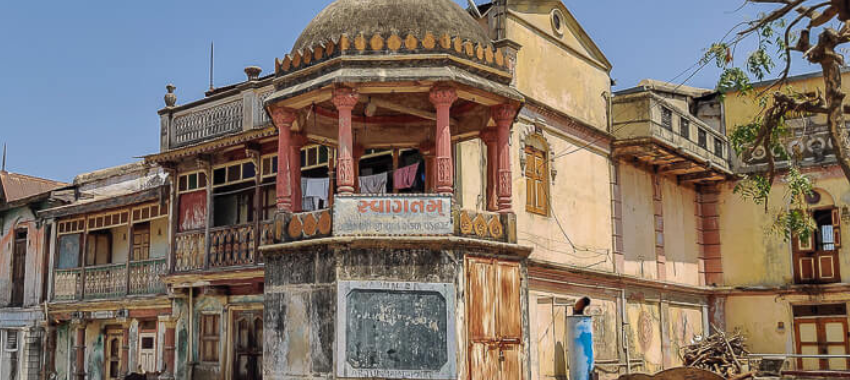
Narendra Damodardas Modi was born on 17 September 1950 in Vadnagar, a small town in present-day Gujarat. He grew up in a modest household and was the third of six children. His early environment shaped his understanding of everyday struggles, discipline, and self-reliance.
As a child, he occasionally helped his father at a tea stall near the Vadnagar railway station. This phase of life is often highlighted because it represents his humble beginnings and is frequently used to explain his connection with ordinary citizens.
During his school years, he was known as an average student academically but stood out as a confident speaker and an active participant in debates and theatre. These skills later became central to his political communication style.
Early Exposure to RSS and Ideological Training
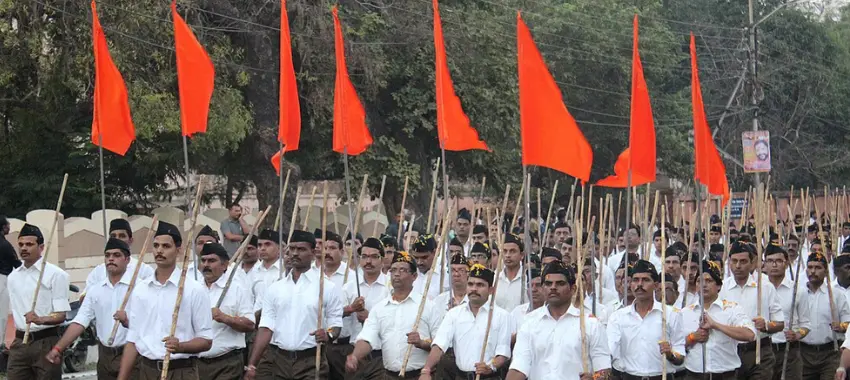
A major foundation of the political journey of Narendra Modi began when he joined the Rashtriya Swayamsevak Sangh (RSS) at the age of eight. He regularly attended RSS shakhas, where he learned discipline, organization, and ideological commitment.
During this period, he met Lakshmanrao Inamdar, who became his mentor and played a significant role in shaping his political outlook. RSS training instilled in him a structured way of working, strong organizational skills, and a lifelong association with Hindu nationalist ideology.
This early association with RSS deeply influenced his future political path and remains a defining aspect of his public identity.
Marriage, Separation, and Personal Choices
Narendra Modi was married to Jashodaben Modi at a young age through an arranged marriage. Soon after, he left home and chose a life dedicated to organizational and political work. The marriage remained largely private for decades and became publicly acknowledged shortly before the 2014 general elections.
This aspect of his life is often discussed because it reflects the personal sacrifices associated with his political dedication and his decision to live a largely ascetic public life.
Years of Travel and Self-Discovery
In his early adulthood, Modi spent time traveling across northern and northeastern India. These journeys exposed him to diverse cultures, social conditions, and spiritual centers. He later returned to Gujarat and settled in Ahmedabad, where he continued his organizational work.
These years of travel helped broaden his worldview and reinforced his commitment to a disciplined political life focused on service and ideology.
Education and Academic Background
Narendra Modi completed a Bachelor of Arts in Political Science from the University of Delhi through distance learning. He later earned a Master’s degree in Political Science from Gujarat University.
While his educational qualifications have occasionally been debated in public discourse, his academic background in political science contributed to his understanding of governance, administration, and political theory.
Role During the Emergency: Political Maturity Under Pressure
The Emergency period (1975–1977) was a defining chapter in the political journey of Narendra Modi. During this time, civil liberties were suspended, opposition leaders were jailed, and political organizations were restricted.
Modi worked actively to oppose the Emergency, operating underground, organizing resistance networks, distributing pamphlets, arranging safe houses, and helping political activists avoid arrest. He often traveled in disguise to escape detention.
This period sharpened his political instincts, taught him crisis management, and strengthened his commitment to political organization under challenging conditions. He later documented these experiences in a Gujarati book describing the struggle during the Emergency.
Entry into BJP and Rise as an Organizer
In 1985, Modi formally entered the Bharatiya Janata Party (BJP) after years of RSS work. He quickly gained recognition for his organizational abilities and election strategies.
He played a crucial role in BJP’s success in municipal elections in Gujarat and soon became organizing secretary of the party’s state unit. His efficiency, discipline, and planning skills helped the BJP expand its presence in Gujarat.
He later moved to New Delhi, where he handled organizational responsibilities in several states and eventually became General Secretary (Organisation) of the BJP, one of the most powerful internal positions in the party.
National Political Campaigns and Strategic Influence
Modi played an important role in major political campaigns such as L. K. Advani’s Ram Rath Yatra and Murli Manohar Joshi’s Ekta Yatra. These mass mobilization campaigns helped the BJP grow nationally and positioned Modi as a trusted strategist within the party.
His ability to manage large-scale campaigns and grassroots mobilization made him indispensable to the BJP leadership.
Becoming Chief Minister of Gujarat (2001)
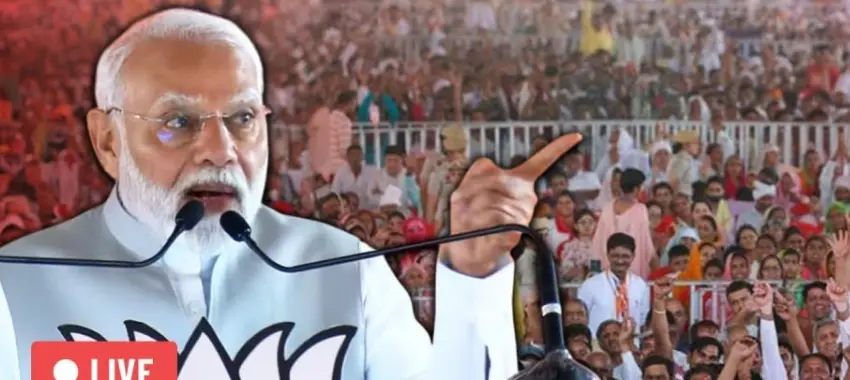
In October 2001, Narendra Modi was appointed Chief Minister of Gujarat, replacing Keshubhai Patel. This marked his transition from organizational politics to executive governance.
Soon after, he won a legislative seat and began leading the state administration. His tenure as Chief Minister lasted until May 2014, making him one of Gujarat’s longest-serving leaders.
2002 Gujarat Violence: A Turning Point
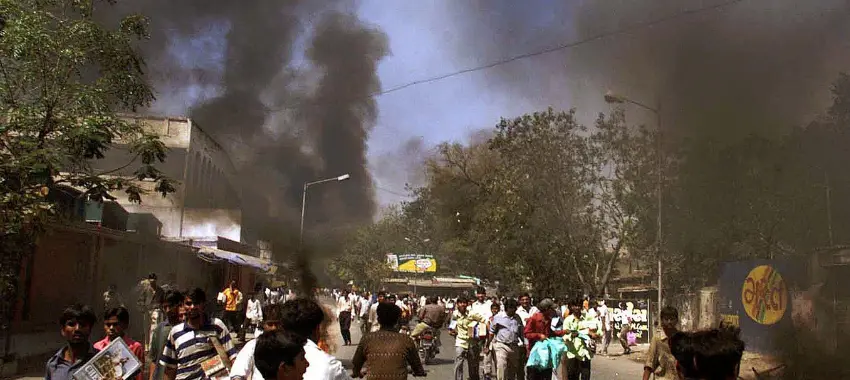
The 2002 communal violence in Gujarat remains one of the most controversial episodes in the political journey of Narendra Modi. Following the Godhra train incident, widespread riots broke out across the state, leading to large-scale loss of life and displacement.
The state government faced severe criticism over its handling of the situation. Investigations, legal proceedings, and public debates continued for years. A Supreme Court–appointed Special Investigation Team later concluded that there was no evidence to prosecute Modi, and subsequent court rulings upheld this conclusion.
Despite legal closure, the events left a lasting impact on his national and international image and continue to shape political discourse.
Development, Growth, and Criticism in Gujarat
As Chief Minister, Modi promoted a development-focused governance model. His administration emphasized infrastructure, investment, power reforms, industrial growth, and business-friendly policies.
Initiatives such as power distribution reforms, industrial summits, and improved administrative efficiency earned praise from supporters. Gujarat recorded strong economic growth during this period.
However, critics pointed to concerns over social indicators such as health, education, and inequality. Debates emerged over whether growth benefits were evenly distributed across communities.
National Rise and the 2014 General Election
The 2014 general election marked a historic moment in the political journey of Narendra Modi. Leading the BJP’s campaign, he focused on development, governance reform, and anti-corruption messaging.
The BJP secured a full parliamentary majority, the first party to do so in three decades. Modi was sworn in as Prime Minister of India on 26 May 2014 and began a new phase of centralized leadership.
First Term as Prime Minister: Reforms and Governance Style
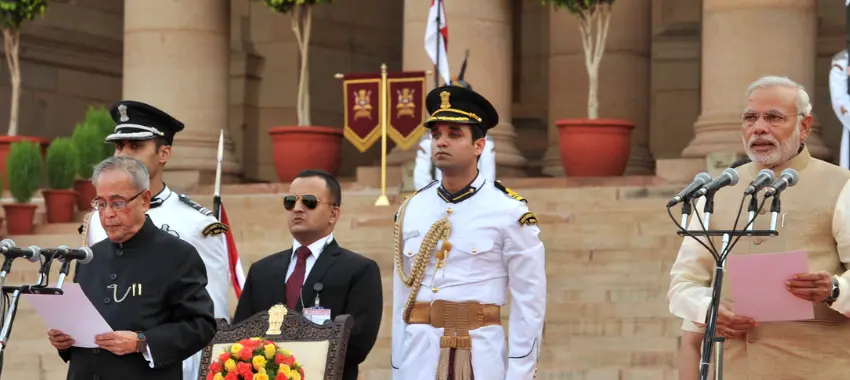
During his first term, Modi introduced major policy changes, including demonetization and the Goods and Services Tax (GST). These reforms aimed to formalize the economy and simplify taxation but also caused short-term disruption.
Institutional changes such as replacing the Planning Commission with NITI Aayog reflected his preference for centralized decision-making and administrative restructuring.
Second Term (2019): National Security and Major Policy Shifts
Re-elected in 2019, Modi’s second term focused strongly on national security, governance reforms, and ideological goals.
Key actions included:
- Revocation of Article 370 in Jammu and Kashmir
- Introduction of the Citizenship Amendment Act (CAA)
- Agricultural reforms that led to prolonged farmers’ protests and were later repealed
- Managing India’s response to the COVID-19 pandemic
These decisions strengthened support among his base while also generating widespread protests and criticism.
2024 Election and Third Term
In the 2024 general election, the BJP did not secure a single-party majority but formed a government with its allies under the National Democratic Alliance. Narendra Modi began his third term as Prime Minister, marking a shift from majority rule to coalition governance.
The consecration of the Ram Mandir earlier in 2024 symbolized a major ideological milestone during this phase of his leadership.
Why the Political Journey of Narendra Modi Matters?
The political journey of Narendra Modi represents a transformation in Indian politics, from coalition instability to strong leadership, from organizational discipline to mass mobilization, and from regional leadership to global diplomacy.
His journey continues to influence political debate, policy direction, and electoral strategies across India.
FAQs
What is the political journey of Narendra Modi?
It is the story of his rise from RSS worker to BJP organizer, Gujarat Chief Minister, and three-term Prime Minister of India.
When did Narendra Modi become Prime Minister?
He became Prime Minister on 26 May 2014.
Why is Narendra Modi considered controversial?
Due to major events such as the 2002 Gujarat violence, economic reforms, citizenship laws, and governance style.
How long was Narendra Modi Chief Minister of Gujarat?
From 2001 to 2014.
Why political journey of Narendra Modi of journey important in Indian politics?
It reshaped leadership style, election campaigning, and governance models in India.